 Cars
Cars| page 3 | (go to cars page 1 or go to cars page 2) |
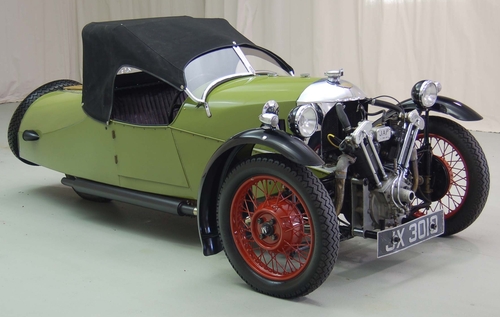
The British firm Morgan built cars with three wheels since 1910 (according to traffic laws those are motorbikes), but in the thirties started to build cars that had four wheels. The firm is still in existence. The cars are still built by hand, and nowadays they have engines built by Ford. Isn't this one a beauty? A ferocious cutie, I'd say, or something like that. The engine (or at least the largest part of it) is in front of the car, giving it the looks of a monster, but one man alone might be able to lift the rear of the car, having just one wheel at the back, up from the ground. Thanks to its small weight the car is quite fast, despite its small two-cylinder engine. This picture is from Hyman Ltd.
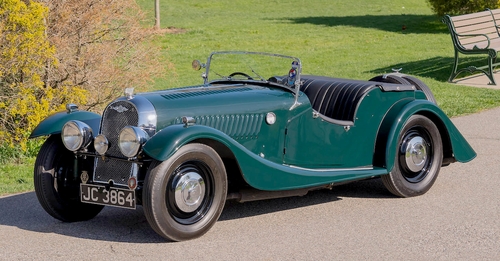
This is one of the first cars Morgan built that had four wheels. This picture is from Bonhams Auctioneers.
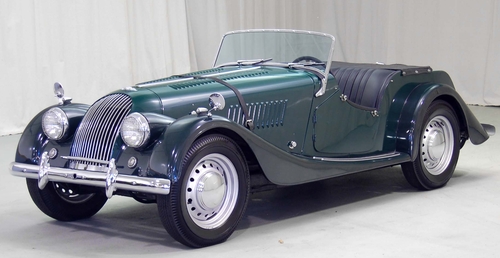
After the war a number of small adjustements were made to the design, most strikingly to the radiator, but to this very day Morgan still builds cars that in their appearance very much resemble this one. In 2016 I visited the Morgan-factory in Malvern Link with Laura. This picture is from Hyman Ltd.
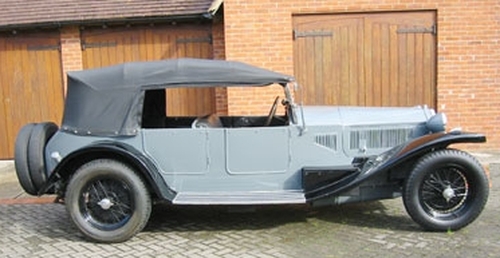
Lancia is an Italian car-brand that exists since 1906 and managed to stay independent until 1969. This was the first car to have a monocoque-type body and the first to have independent suspension. Beautifully long and slender (even more so with its hood down), and beautiful, flowing mud-guards.
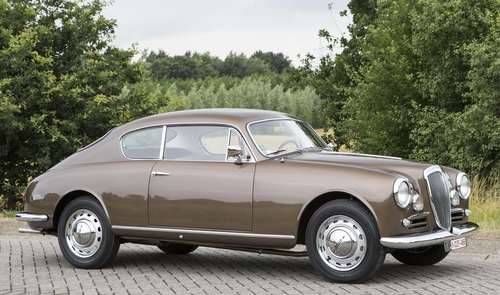
This car plays an important part in a book in the series Tintin, called The Calculus Affair. An Italian with this car tries to prove to Tintin and Haddock "that the Italian cars and Italian drivers are the best in the world." Wonderful from head to toe, this car, designed by Pininfarina. This picture is from Bonhams Auctioneers.
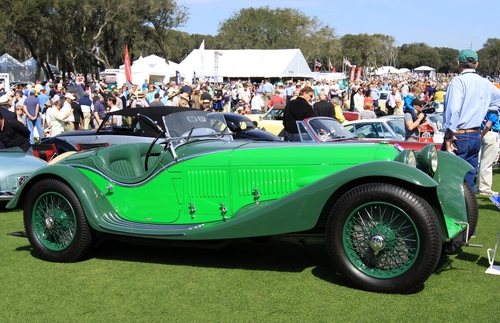
Maserati is an Italian firm, founded by no less than six brothers, that builds cars since the 1920s. This is the only Maserati with 16 cylinders. Aren't the lines in this car beautiful and smooth, and isn't that hood impressively long. Zagato is the name of the coach-builder.
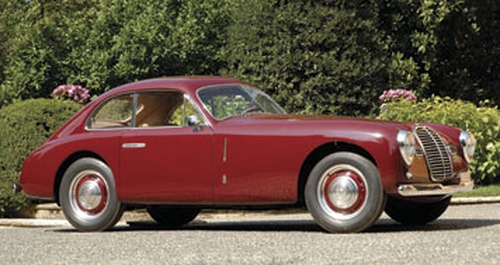
Such simplicity and such beauty. Shortly after the war I suspect it was not a time to design with unnecessary frills... The design of this car was done by Pininfarina (designer Battista Farina was called Pinin since his childhood and later decided to give that name to his firm).
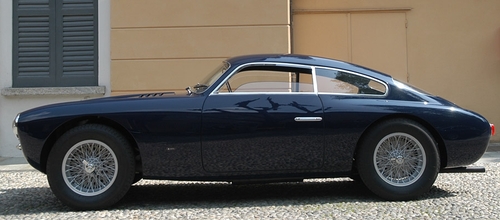
Gosh, is this low. And so small. Wonderful and simple, a little like the Lancia Aurelia (but more slender). Miraculously beautiful. Zagato is the name of the coach-builder.
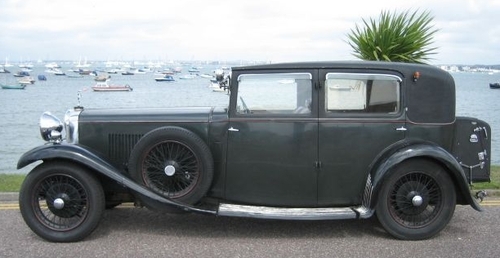
The brand Sunbeam built cars in Wolverhampton from the beginning of the twentieth century until 1935. Most were either large, luxurious competitors for Rolls-Royces or race cars. This car is big and luxurious, but also relatively light in weight. The coachwork was done according to the Weymann-licences, in which a wooden frame was covered with leather to keep the car's weight as low as possible. In the large trunk on the back there are four smaller suitcases on top of eachother. This picture is from Black & White Cars, sellers of cars in Bournemouth.
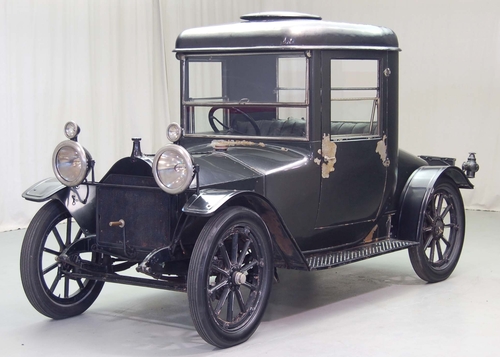
Hupmobile was an American car-brand, founded by the brothers Hupp in Detroit, which built cars between 1909 and 1940. I think this car has a wonderfully unconventional design, with those strangely high placed headlights and its chubby roof. The paint is not anymore what it used to be, but there will surely be some collector around to repair that. Note the high lid of the radiator and the wooden spokes. This picture is from Hyman Ltd.
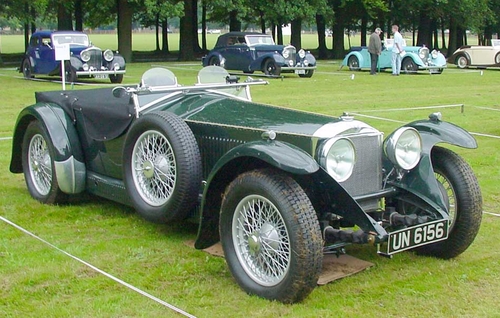
Invicta was an British car-brand that built cars between 1925 and 1935. I think this is a beautiful car, because it is so close to the ground and because it is big but doesn't really look like that. I also like the long hood in the shape of a pointed roof. Note the construction by which two triangles are used to place the wind-screen on the hood. The whole interior of the car, when it is standing still, can be covered with a canvas cloth, called a 'tonneau-cover.'
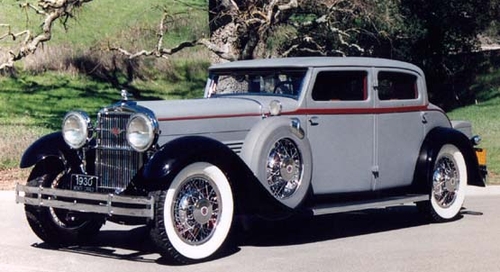
Stutz was an American brand, that between 1911 and 1935 built cars for the very rich. I think this is a beautiful car, amongst other things because of the low wind-screen and side windows, and because of the covered spare tire. It looks like a big and yet fast car.
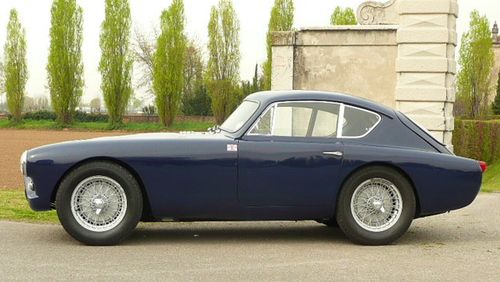
AC is a British car-brand, that became famous in the United States because of a combination of a typically light European sportscar with an equally typically large American engine, the AC Cobra. I think the Cobra is a car that boasts and has nothing to show, and I love the simplicity of the lines of this Aceca. This picture is from Motorstorica, sellers of cars in Brescia, Italy.
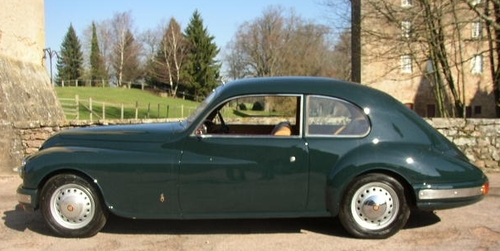
The brand Bristol, near the city of Bristol, builds cars since the second world war, nowadays probably less than a hundred a year. They don't really believe in any modernistic nonsense. I think this is a magnificent car, with a beautiful rear side, designed by someone with a will of his/her own. This picture is from ACCLC.
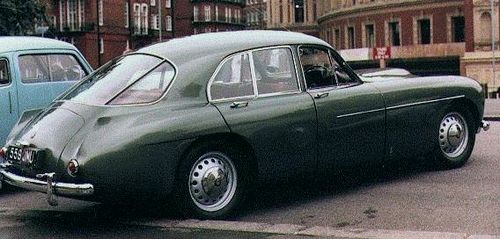
Around 2001 I saw one of those cars parked somewhere in Utrecht. I had no idea about the brand, and I walked at least eight times all around it. It was nowhere to be read. It is a car that draws attention, with those bars in the back window, those small rear fins, and a third headlight in the middle of the front, right on the nose. This picture is from the Bristol Owners Club.
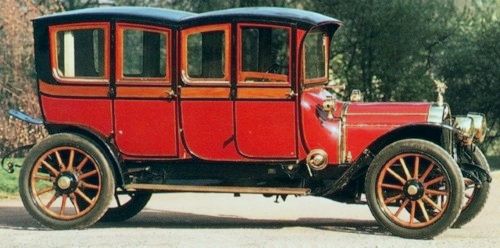
Léon Bollée was an inventor, who built mechanical calculators from 1889 on. Starting in 1895 he also built cars, in Le Mans. After his untimely death in 1913 his widow continued his work for some more years. This car has beautifully old-fashioned looks, in part because of the name Double Diligence. Note the low point in the middle of the roof, the four side-windows but only two doors on each side, and the roof that hangs over the windscreen.
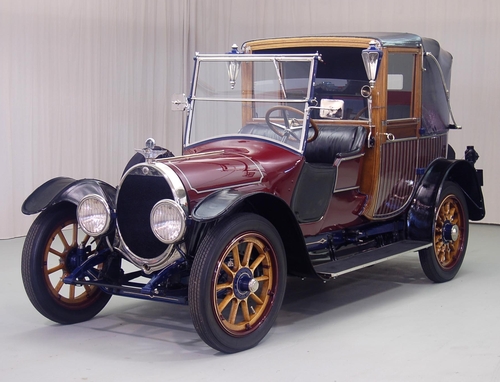
The American firm Brewster originally was a coach-builder, but it built a number of automobiles as well. They went under in the thirties. I had never before heard of them when I found this picture. This automobile is their first car, and it uses a sleeve valve engine. Isn't this oval radiator beautiful. And oh, all this wood! All those details, those oil-lamps, the one screen wiper, those handles on the back doors, that receiver (beneath the lamp behind the driver), wonderful! Weren't those days completely different...! This picture is from Hyman Ltd.
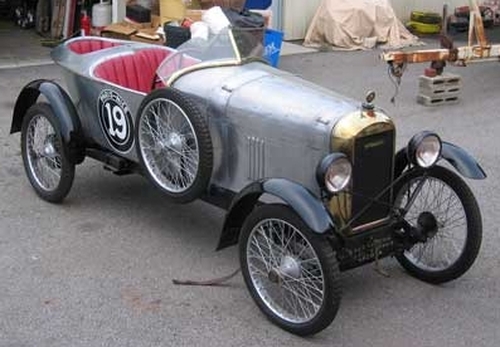
Amilcar was a French car-brand that built small, light cars between the two world wars. Never mind the rubbish. Just get in and drive, I'd say. Do note the space for the passenger in the back, and the tapering back (a 'boattail'). Duval is the name of the coach-builder. This picture is from Platinum Classic Motorcars.
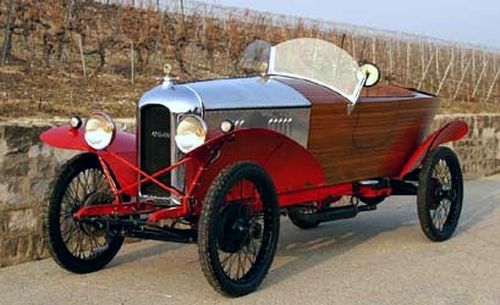
This one looks even more fragile. How beautiful. Wood along the sides, and this one has a boattail too. The thing that is on the wind-shield looks like a rear view mirror, but the steering wheel is on the right... La Phocéenne is possibly the name of the coach-builder. This picture is from Christoph Grohe, a seller of old cars in Switzerland (note the grapes in the background).
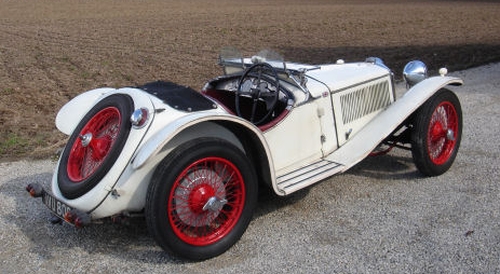
Riley is an old British car-brand. I think the following story I found in wikipedia is fascinating. Riley used to be a factory of bikes. The son of the owner was sixteen in 1898, and in that year he secretly (because he knew his father wouldn't approve) built a car, with his own two hands. That car afterwards was the very first automobile to drive through the streets of Coventry. Fantastic, an era in which someone is able to build a complete car with his own hands... A beautiful, low sportscar with a wind-screen that can be folded down. Beautiful colours too.
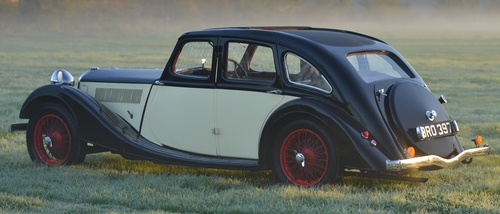
I very much love it if a car's door opens backwards. I also think this is a very beautiful automobile because of the third side-window, the shape of the roof and the round shape on the back behind which I suspect the spare tire is. This picture is from Vintage & Prestige, a seller of old cars in England.
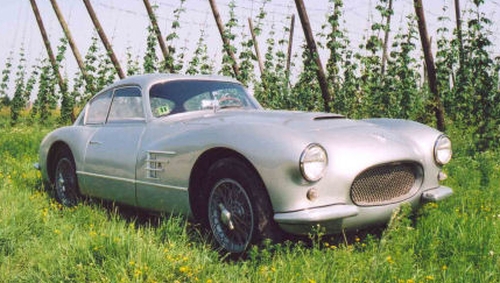
Fiat is the biggest factory in Italy, with its seat in Turin. Zagato is the name of the coach-builder. A stalwart looking car, yet elegant at the same time. This picture I stole from Marreyt Classics, sellers of old cars in Belgium.
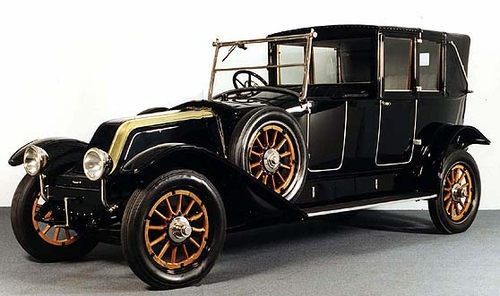
Renault is a French car-brand with its seat in Paris. In the tens and twenties the streets in Paris for a large part were filled with these automobiles and the likes, being used as taxis. Seeing this automobile makes me feel nostalgic, and makes me think of old movies in black and white. Note that the radiator of this car is not at the front, but behind the hood, just in front of the wind-screen (it can be recognized because it has a lid on top of it).
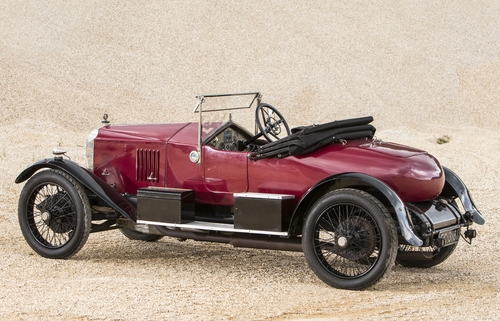
Vauxhall nowadays is the name Opel uses to sell cars in the United Kingdom, but it used to be a renowned British brand. Its cars were trustworthy and fast, and because of that were successful in races. A Vauxhall could be recognised, like this one, by its hollow shapes on the top sides of the bonnet. I think this type is wonderfully narrow and stately. Grosvenor is the name of the coach-builder. I stole this picture from Bonhams Auctioneers.


